Options
Morning practice or a sumo show?
How watching stable practice differs from a staged sumo show, what the options on this page are, and which suits your trip.
Book the stable show ↗Quick answer
A sumo show is staged for visitors, with an MC and a chance to join in. Stable practice is the working day of active wrestlers, which stables increasingly allow visitors to watch, with rules that vary. If you want to see sumo as it is trained, a guided practice-watching tour fits. If you want to try it yourself and eat the wrestlers' hot pot, a show fits.
Two different things
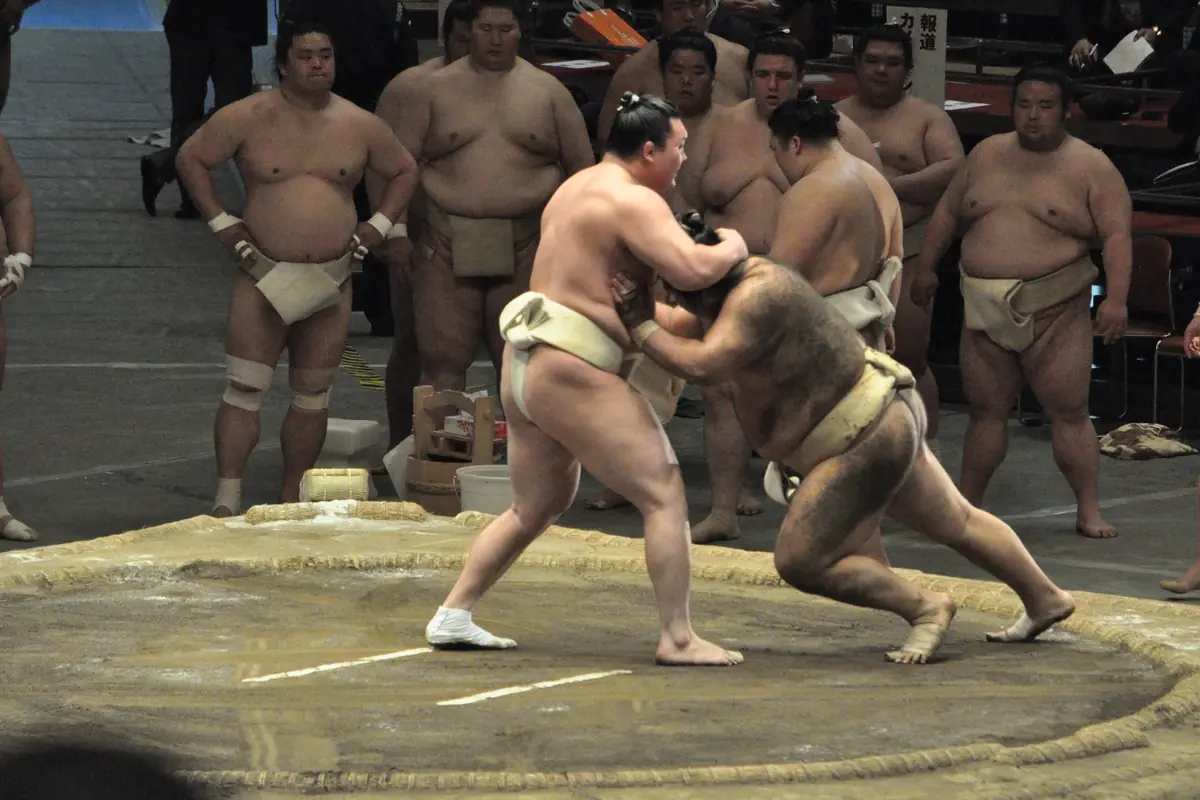
A staged sumo show and a stable practice look alike on a photograph but differ in purpose. A show is arranged for visitors, with an English-speaking MC, demonstrations and a chance to try moves. Practice is how active wrestlers train, in a keikoba, in a set order. The Kiyosumi show is a staged show by retired wrestlers in a former stable. A practice visit is a visit to a working one.
What a stable practice is
Wikipedia says training is the cornerstone of stable life, often early in the morning, with lower-ranked wrestlers starting first and the senior wrestlers joining by rank. Stables have become more open, the article says, and it is common for them to welcome visitors to watch training. Spectators can usually attend free of charge, though rules vary from stable to stable, such as group size, and whether advance notice or a Japanese speaker is required. A practice visit is quiet, and visitors watch.
The guided option on this page
One card on this page is a three-hour guided tour in English with a former sumo journalist, listed as sumo watching with walks. Someone who follows the sport leads it, and the booking page says it is wheelchair accessible. You can cancel at no charge until 24 hours before, on the GetYourGuide booking. Read the description for what you watch and where, because details can change with the date.
How the show differs
The Kiyosumi show asks for less patience and gives you more to do. The organiser says guests may step onto the ring, try training techniques with former wrestlers and challenge a match, while an MC explains the sport in English. It runs about ninety minutes. If you want to try a move, laugh with a group and perhaps eat the hot pot, the show fits better. If you want quiet observation of real training, practice fits better.
What to check before you go
For the show, check the calendar for the option and the date, whether the VIP option with the hot pot is offered, and the meeting point on your confirmation. For the guided tour, check what you watch and where, how the day starts and how the walks fit around it, because the page describes both. For any stable you visit on your own, Wikipedia says to expect rules on group size, advance notice and language, so ask first. In every case, read the confirmation, not an old blog.
Which to choose
Choose the practice-watching tour if you are curious about the sport's discipline and happy to watch in silence, and you would rather see active wrestlers than retired ones. Choose the show if it is your first evening in Tokyo, you travel with a group that likes to join in, or you want the meal. Both are arranged for visitors, not staged as tournaments. Neither replaces the grand tournaments in January, May and September, which are booked through the Japan Sumo Association.
Read next: Kiyosumi stable or Ryogoku dinner?
Who neither suits
If ranked bouts are what you want, neither fits, because tournaments are a separate booking. Anyone who needs a lively programme will find the practice route a poor match, since practice sessions are working sessions. If you want the quiet of a real stable and cannot attend one, a guided tour is the more reliable route, because stables differ on advance notice and language. Check the details for your date before you book anything.
Frequently asked questions
Can I watch a sumo stable practice?
Often yes. Wikipedia says it is common for stables to welcome visitors to watch training, usually free of charge, with rules that vary by stable.
Is the Kiyosumi show a stable practice?
No. It is a staged show by retired wrestlers in a former stable, with an MC and optional audience participation.
Is the guided tour wheelchair accessible?
The booking page for the three-hour tour says it is wheelchair accessible. Check the details for your date.
Which is better for a first visit?
The show gives more to do and explains the sport in English. The tour suits visitors who prefer to watch real sumo.
Sources