The sumo show in a former stable
A ninety-minute show by retired wrestlers with an English-speaking MC, held in a former sumo stable in Kiyosumi. The hot pot is part of the VIP option at certain shows only.
Kiyosumi · Tokyo
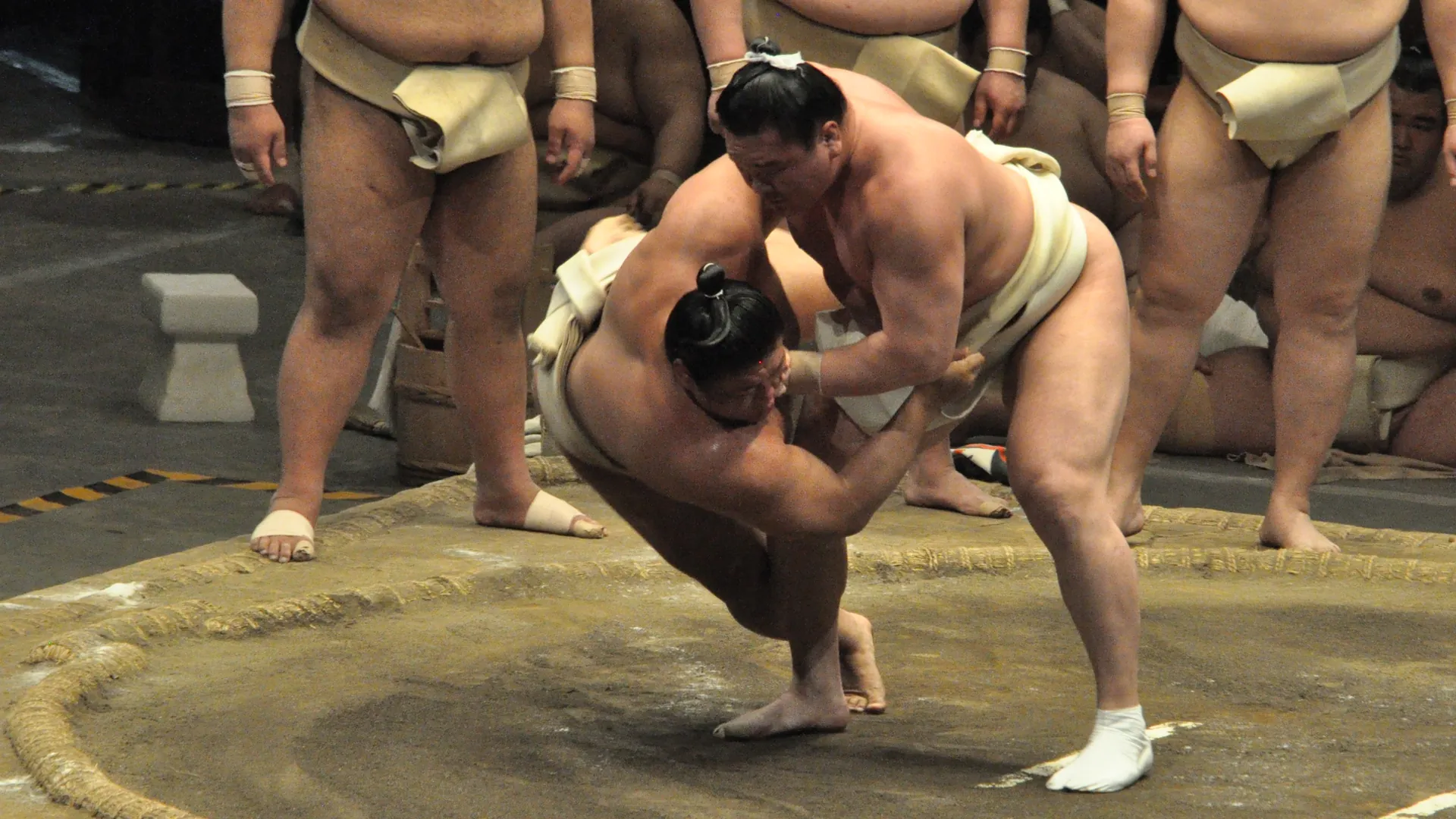
Retired professional wrestlers clash just metres from your seat, in a sumo house near Ryogoku, Tokyo's sumo district.
Guests love the hearty chanko hot pot the wrestlers eat, and the laughs when volunteers take them on.
A staged show, not a tournament and not a visit to a working stable. The hot pot belongs to the VIP option at certain shows, so check the option you choose.
A stable, or heya, is the house where professional wrestlers live, eat and train under one master. This show is held in a former stable, so you watch sumo in the kind of building where wrestlers once trained, with retired wrestlers and an English-speaking MC. It is worth an evening if you want sumo up close and you can accept a staged show. It is a weaker choice if you want a ranked bout, or if you expect the hot-pot meal at every show.
A live show in English, about ninety minutes long, held in a former sumo stable in Kiyosumi, in Koto ward. Retired wrestlers demonstrate sumo while an MC explains its history and customs, and guests can step onto the ring, try training moves and challenge a bout.
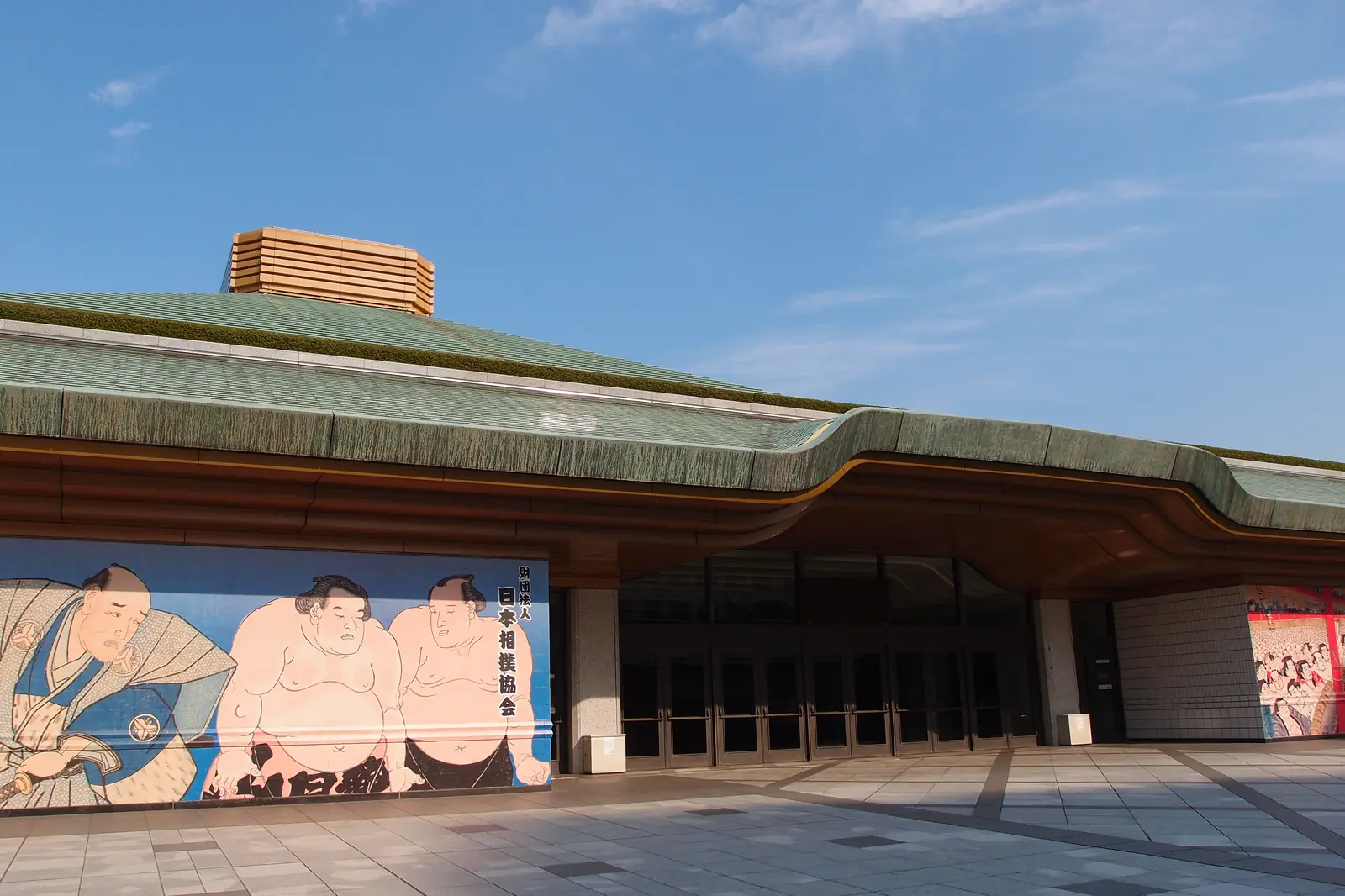
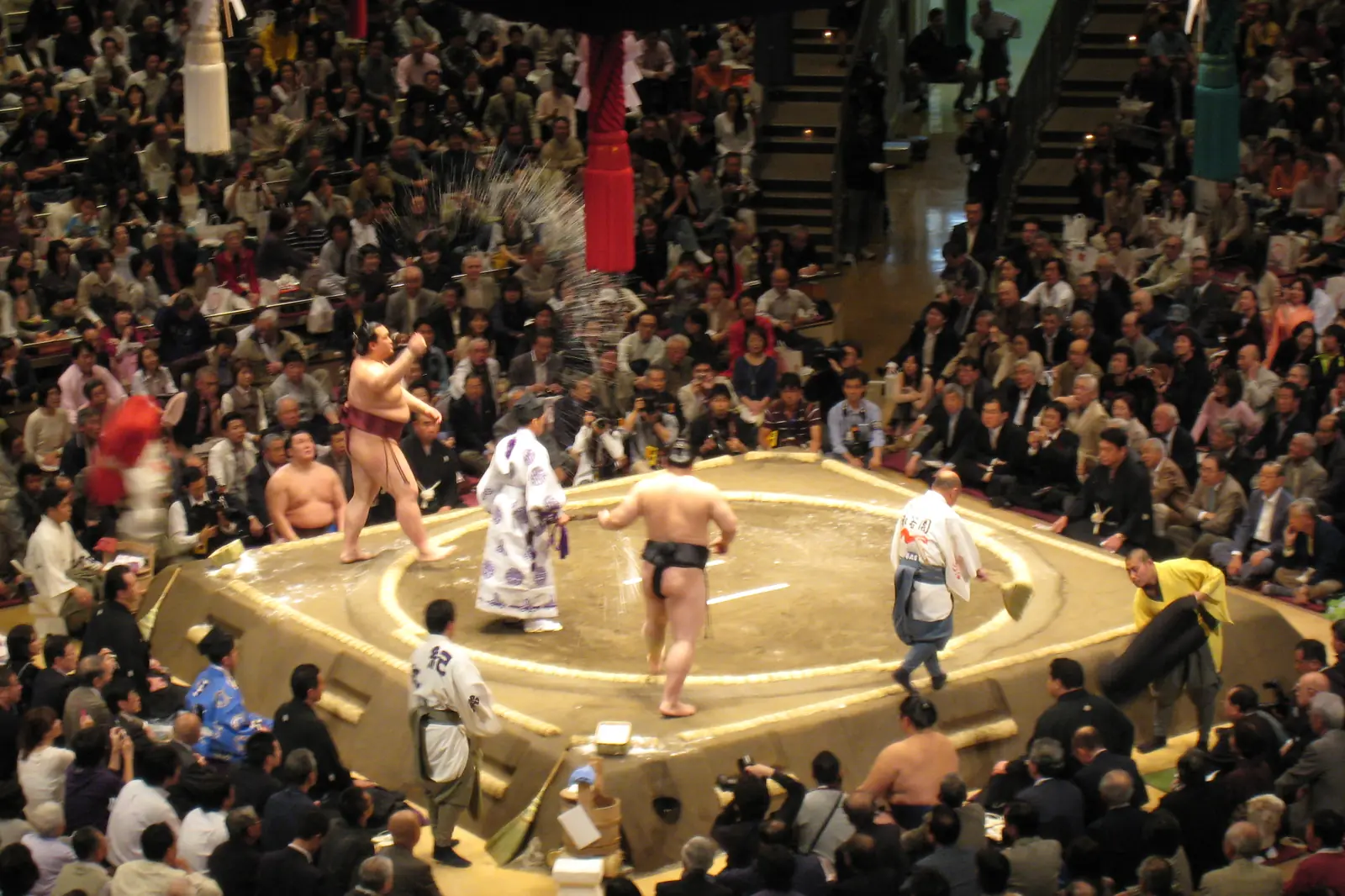
Not a grand tournament, where ranked wrestlers compete for a title, such as the January, May and September tournaments at the Ryōgoku Kokugikan, three of professional sumo's six a year. Not a visit to a working stable, where active wrestlers train. And not a set dinner: the hot pot comes with the VIP option at certain shows only.
Choose the option that names the hot pot if you want the meal, because it is not part of every show. Drinks are bought separately, transport is not included, and vegetarian food can be requested when you book.
The evening in four facts
Inside the stable
A sumo stable follows much the same plan everywhere, built around a training room with a clay ring. These are the parts of a stable and of the sumo you watch, in the order a show tends to reach them.
Shows change their running order and their content. Read this as a guide to what a stable is and what sumo looks like, not as the programme of any one day.
A heya, or stable, is where wrestlers live, eat, train and sleep under one master. Wikipedia calls it closer to a medieval fraternity than a modern sports team, because wrestlers join for life. The organiser says this venue is a former stable, so the building belongs to that world even though the wrestlers on stage have retired.
At the centre of a stable is the keikoba, the training room, with a floor of packed earth. The floor counts as sacred ground, and a small Shinto altar often hangs on the wall. Wooden planks on the walls absorb the shock of wrestlers who are pushed against them.
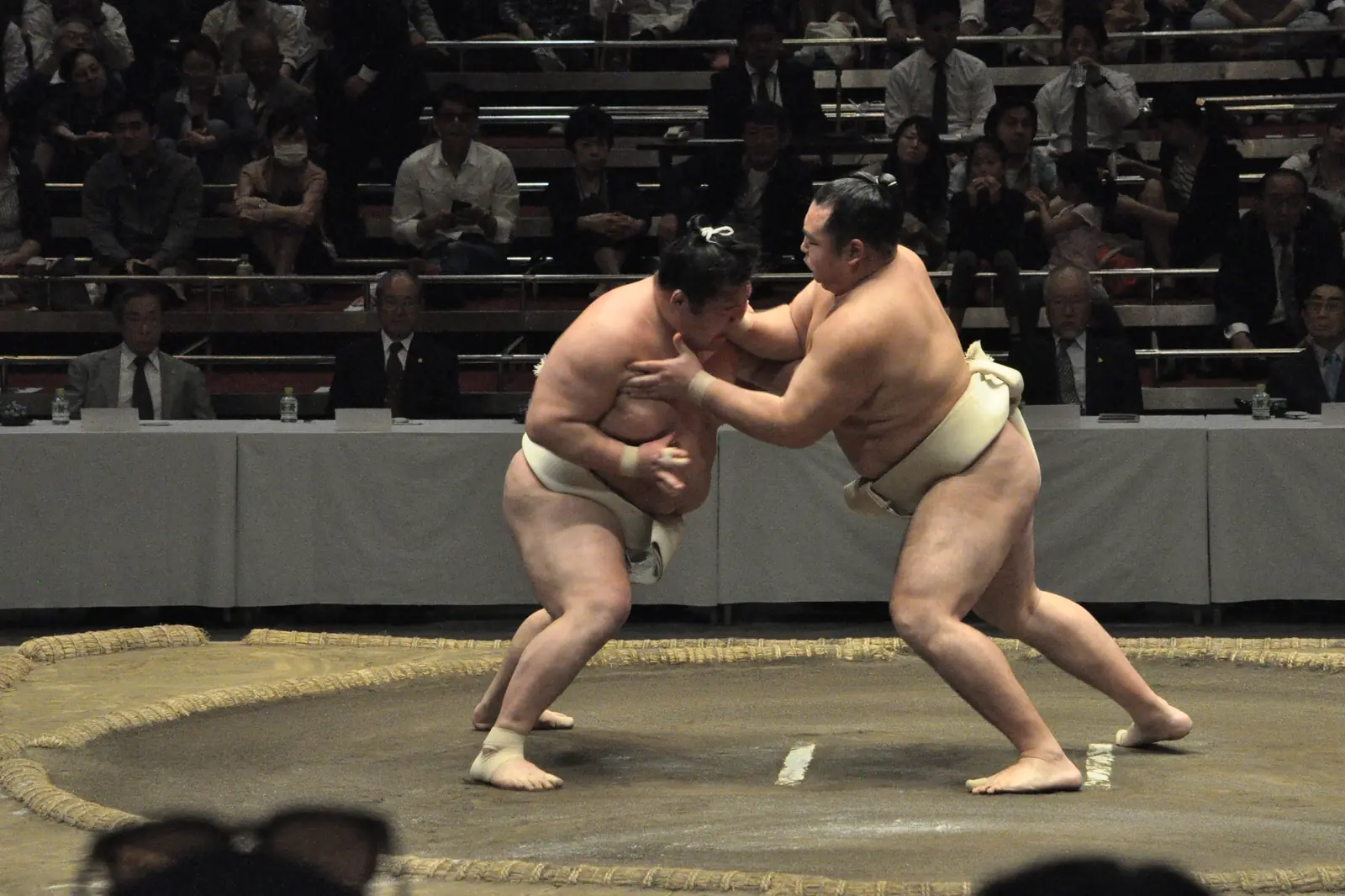
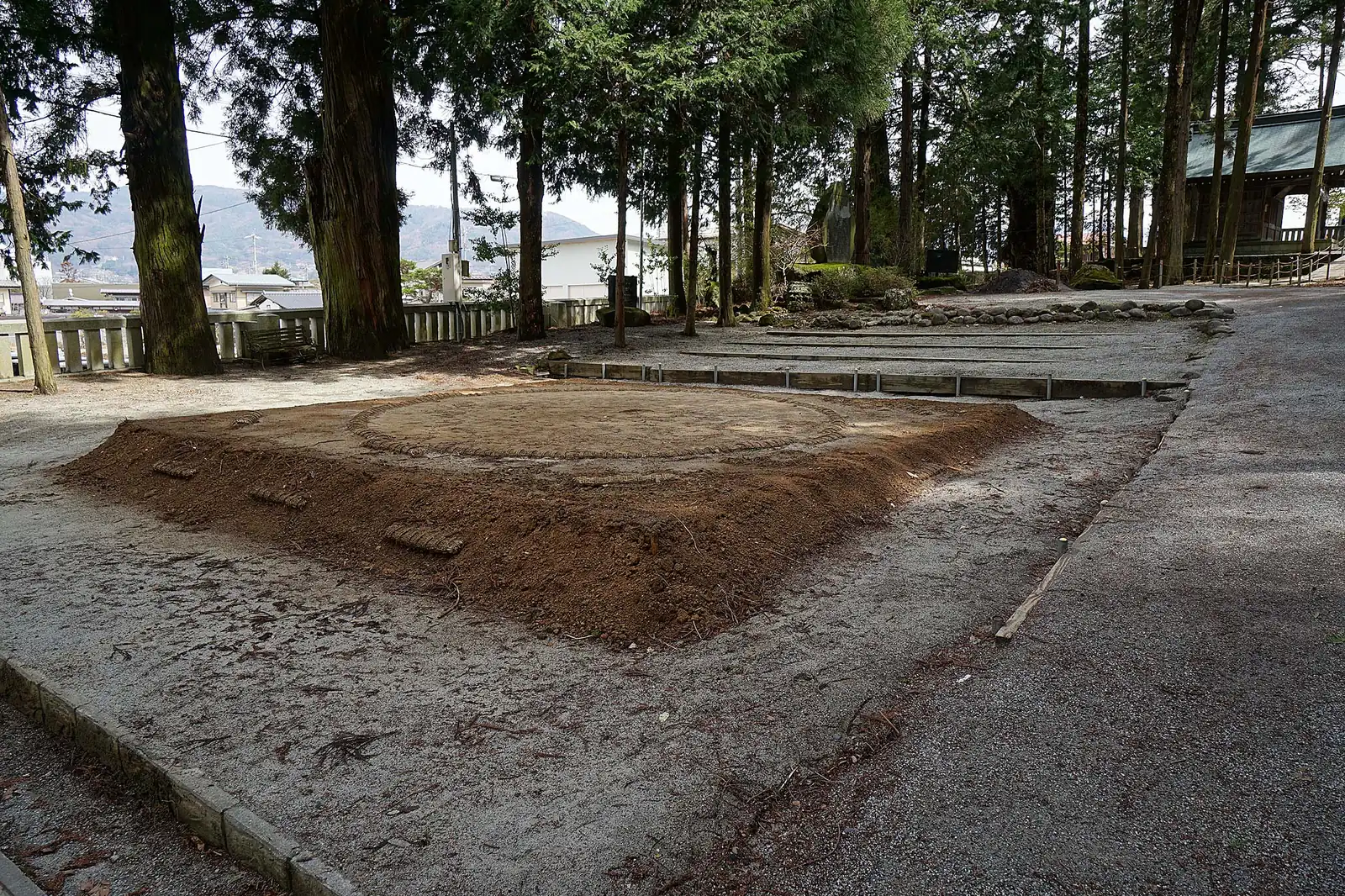
The dohyo is the sumo ring: a circle of packed clay, 4.55 metres across, bordered by half-buried bales of rice straw called tawara. In professional tournaments it is mounted on a square platform of clay, raised above the floor. The organiser says guests may step onto it, so ask the host how and when.
Keiko means training, and training is the cornerstone of stable life. At this show the organiser says guests may try training techniques with former wrestlers. Expect demonstrations and a chance to join in, not a full practice session of the kind active stables hold.
A bout ends when a wrestler is pushed out of the ring or lands on any part of the body except the soles of the feet. It opens with the tachiai, a charge from behind two white lines at the centre, and top-division bouts usually last only seconds. The organiser says retired professionals clash metres away.
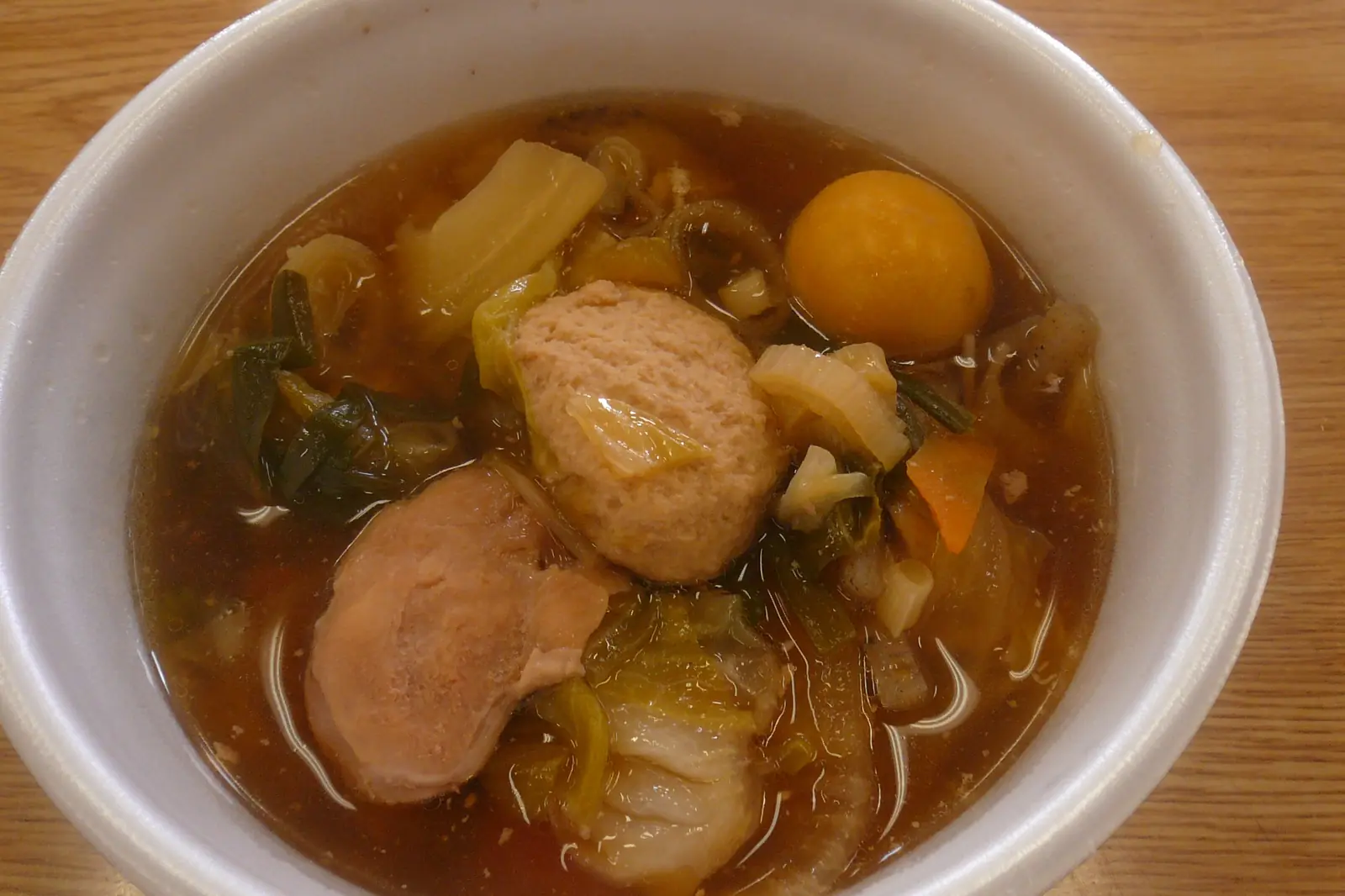
Chankonabe is the stew wrestlers eat. It has no fixed recipe, and chicken, tofu and vegetables are common in it. The booking page lists an all-you-can-eat chicken chanko hot pot with the VIP option, at certain shows only, so read the option name before you pay.
From booking to the last bout
The booking calendar and your confirmation hold the details for your date, and visits tend to follow this order.
Pick a date and an option on the booking calendar. If you want the hot pot, choose the VIP option at a show that includes it, because the meal is tied to that option and to certain shows.
The venue is in Kiyosumi, in Koto ward, and the organiser puts it minutes from the Ryogoku area. Transport is not included, so check the meeting point on your confirmation and plan the route.
Bring a camera, as the booking page suggests. Smoking is not allowed indoors. Alcohol and soft drinks are paid for on site.
An English-speaking MC explains sumo's history and customs while retired wrestlers show the sport. Some reviewers find the introduction long and would like more time on the bouts.
Guests may step onto the ring, try training techniques and challenge a match. Taking part is optional, and many visitors simply watch and laugh.
If your option includes it, the chanko is all-you-can-eat. In a working stable the senior wrestlers and any guests are traditionally served first.
What the ticket covers
Seven terms to read before you pick a date.
Photographs
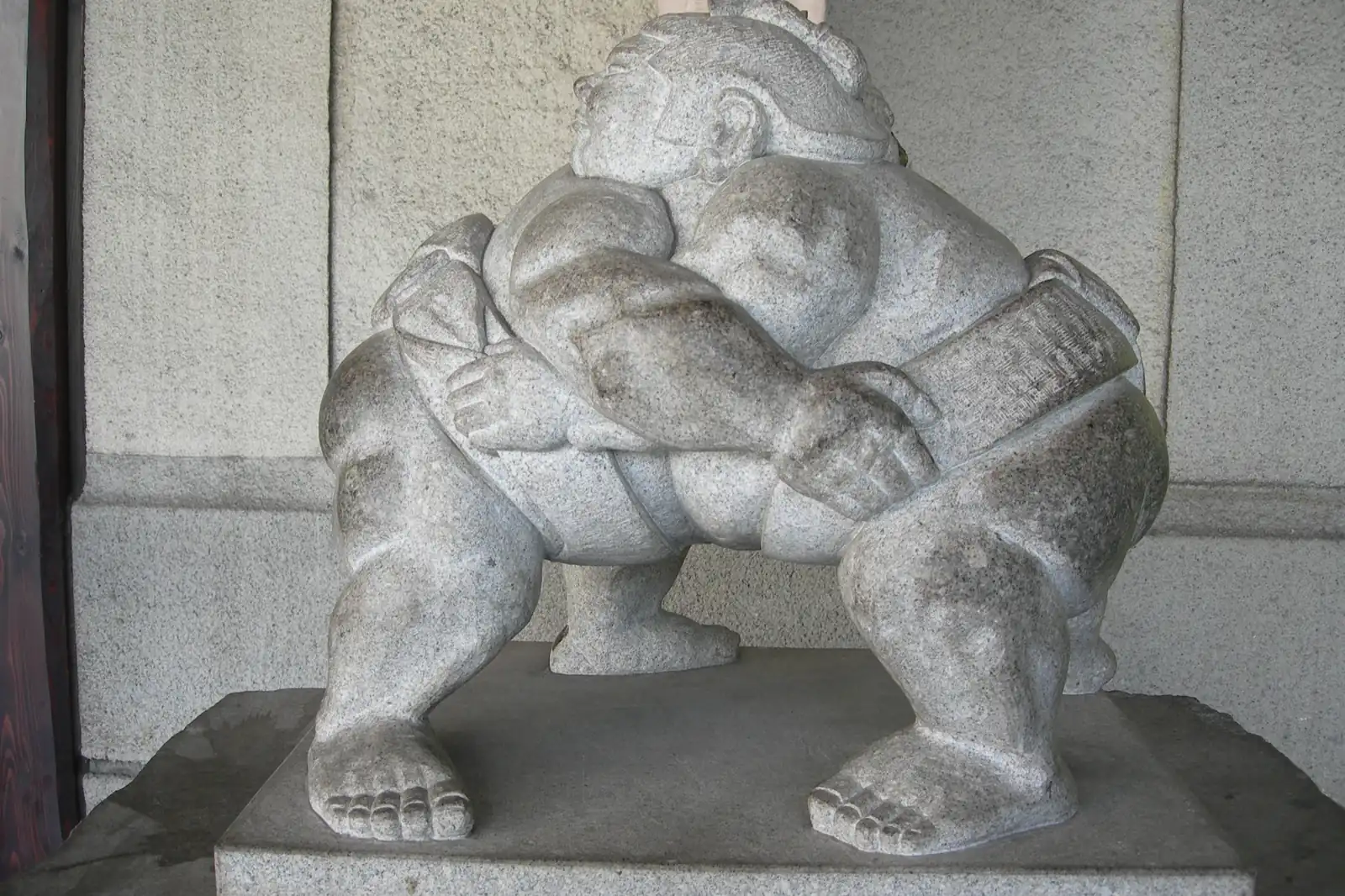
None of these photographs shows the venue. They show wrestlers at a practice session, the Kokugikan arena in Ryogoku, a bowl of chankonabe, a clay ring, salt thrown at a tournament and a sumo statue in Ryogoku station.
Four ways to see sumo in Tokyo
The first card is the show in the former stable that this site covers. The second is a sumo dinner in Ryogoku, the third a show with a Japanese meal in Asakusa, and the fourth a guided sumo-watching tour with a former journalist.
A ninety-minute show by retired wrestlers with an English-speaking MC, held in a former sumo stable in Kiyosumi. The hot pot is part of the VIP option at certain shows only.
A sumo wrestling session with chanko nabe and mochi, in Ryogoku, the district at the heart of professional sumo. It is a separate booking with its own venue, and the guide on Kiyosumi against Ryogoku sets the two side by side.
A show with a Japanese meal and a drink, opened by a geisha dance and listed at about two hours, at a venue in Asakusa. It suits visitors who would rather stay on the Asakusa side of town.
A three-hour guided tour with walks, led in English by a former sumo journalist. It is the choice if you would rather watch real sumo than a staged show.
Other bookings around Tokyo
Practical notes
The venue stands in Kiyosumi, a district of Koto ward in eastern Tokyo. Your confirmation gives the meeting point and full address, so follow that for your route.
The district shares its name with Kiyosumi-shirakawa station, where the Hanzomon Line of Tokyo Metro and the Oedo Line of the Toei network both stop. Check the route from your hotel to the meeting point on your confirmation.
Ryogoku is regarded as the heartland of professional sumo, and most training stables are based there. The organiser puts the venue minutes from the Ryogoku area.
The hot pot comes with the VIP option at certain shows only. Alcohol and soft drinks are paid for on site, and vegetarian food can be requested when you book.
A camera, as the booking page suggests, and clothes you can move in if you plan to try the training moves.
The booking page recommends booking ahead. The show is wheelchair accessible according to the same page, and smoking is not allowed indoors.
More reading
FAQ
A heya is a sumo stable: the house where professional wrestlers live, eat, train and sleep under a single master, sharing one roof and one daily routine. This show is held in a former stable.
No. It is a ninety-minute show by retired professionals, with an English-speaking MC. Real tournament bouts are separate: the Kokugikan in Ryogoku hosts three of the six held each year, in January, May and September.
No. An all-you-can-eat chicken chanko hot pot and bottled water come with the VIP option, and only at certain shows. Check the option name and the date on the booking calendar before you pay.
No. Alcohol and soft drinks are paid for on site, whichever option you choose. Vegetarian food can be requested when you book.
The organiser says guests may step onto the ring, try training techniques with former wrestlers and challenge a match. Taking part is optional, so you can also watch from your seat.
The booking page says the show is wheelchair accessible. Check the access details on your confirmation if you need a ramp or lift, and book ahead, as the page recommends.
Transport is not included. The venue is in Kiyosumi, in Koto ward, and your confirmation gives the meeting point. Kiyosumi-shirakawa station is served by the Hanzomon and Oedo lines.
Because of the chanko hot pot, which the booking page ties to the VIP option at certain shows. Other options do not list the meal, so read the option before you book.
The calendar shows the cost in whichever currency you choose.